
TRAM Flap
Transverse rectus abdominis myocutaneous flap. Uses muscle, fat and skin from the lower abdomen. It is the abdominal flap that takes muscle, so the risk of abdominal weakness or hernia is higher than with a DIEP, which spares the muscle. It is done in two ways, and they differ in how much of the muscle goes with the tissue. Either way the abdomen is left with a scar from hip bone to hip bone and around the navel. Not having enough donor tissue in the lower abdomen, or earlier scars that may have damaged the important blood vessels, can rule it out.
Pedicled TRAM
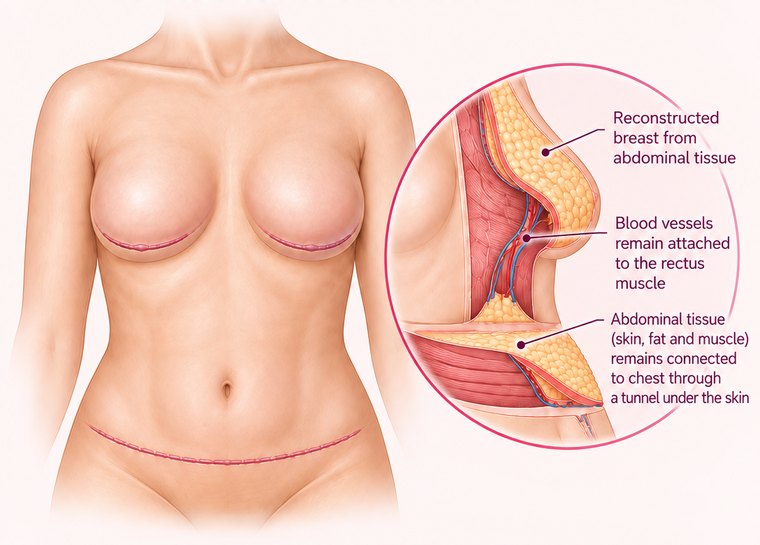
The tissue never leaves its own blood supply. That supply comes from the rectus muscle underneath it, so the flap stays attached to the muscle and is tunneled up through the abdomen and chest to form the breast mound. The entire muscle on that side is sacrificed, and you may be left with some abdominal weakness, or find sit-ups difficult.
Free TRAM
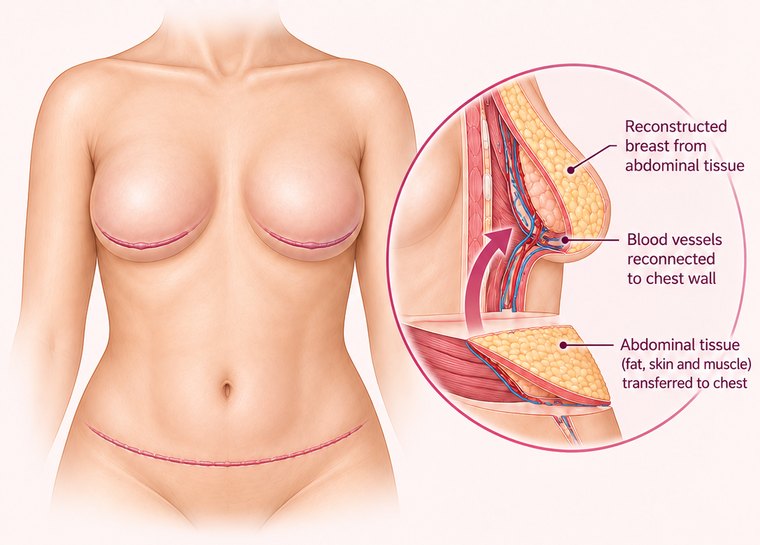
Also supplied by the blood vessels running through the rectus muscle, but here the muscle above and below those vessels is divided, so that only a portion of it is removed. The whole flap is then transplanted to the chest and its vessels joined to vessels there under a microscope.
Sources: American Society of Plastic Surgeons; National Cancer Institute; American Cancer Society.